Build Prop References Without Hands or Backgrounds
Build clean 3:4 prop references that preserve shape, material, scale, wear, and markings without hands or scenery.
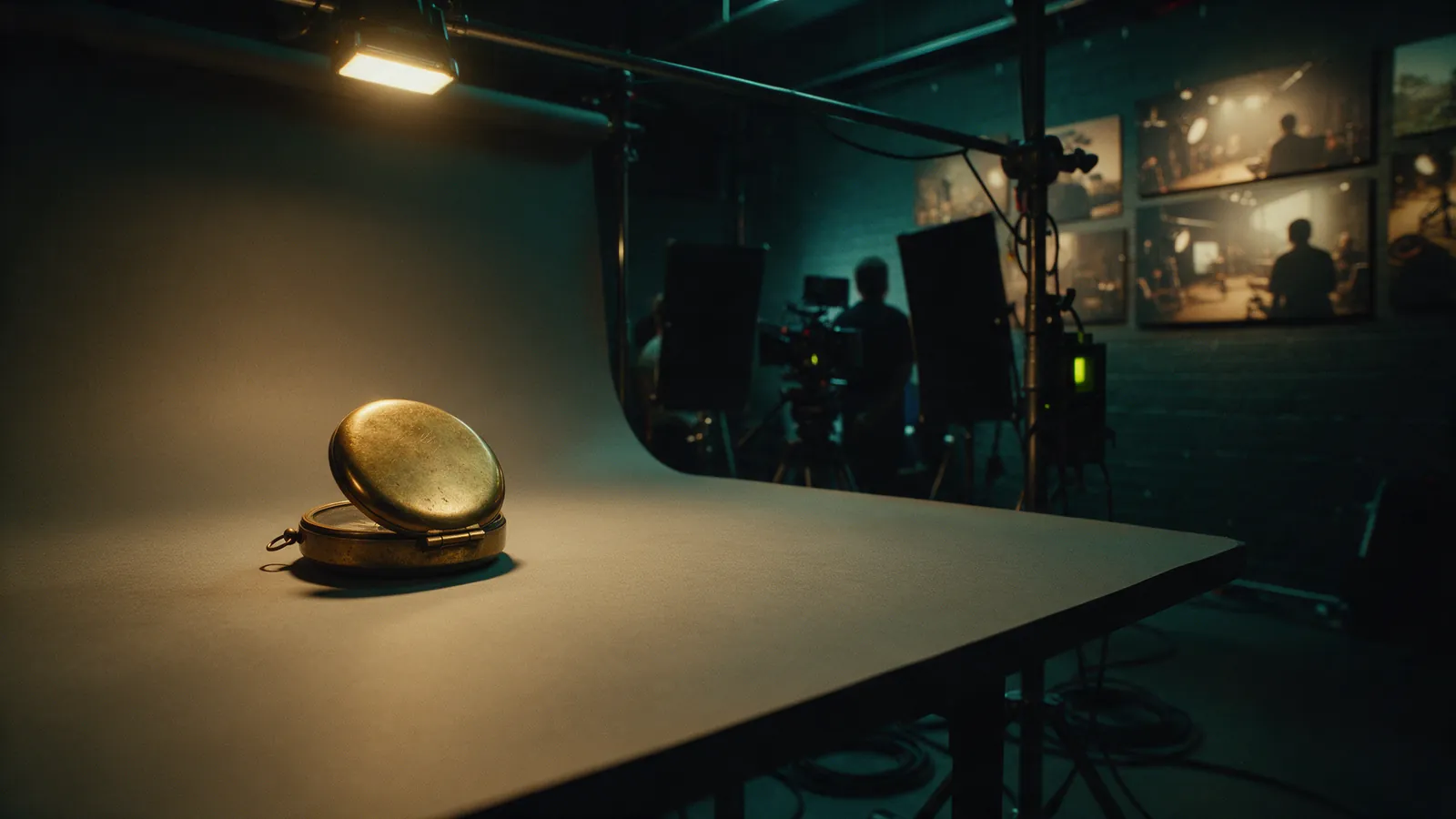
A prop reference starts as one 3:4 image of the complete object, isolated from hands, characters, and the environment.
That sounds restrictive because it is.
The reference has one job. It must define the physical object clearly enough that its shape, color, material, proportions, wear, and markings can remain consistent when it appears again.
A hand does not help with that job. A character does not help. A finished scene does not help. They add information that is not part of the object.
I want the reference to answer one question: what exactly is this prop?
Decide whether the object is a prop
A prop is a physical scene object that is not a fixed part of the body or wardrobe.
The category includes a fork, cup, bed, phone, bottle, book, knife, suitcase, lamp, chair, table clock, or vehicle. It also includes any object that carries narrative weight.
That definition gives me the first production decision. Before generating anything, I separate scene objects from items worn by a character.
A cup is a prop.
Glasses being worn are wardrobe. A wristwatch and a cap are also wardrobe when they are part of what the character wears.
The difference is not based on size or importance. It is based on the object’s relationship to the character. If the item is worn on the body and belongs to the look, it should be handled as wardrobe or a wardrobe accessory.
If it exists as a physical object in the scene, it belongs in the prop system.
Making that decision early keeps the reference library clear. I do not want the same item treated as an isolated scene object in one place and as part of a fixed costume somewhere else.
Give every recurring prop its preparation image
My budgeting rule is one preparation asset for each recurring object that needs continuity.
I keep recurring props consistent across scenes. That includes their form, color, material, proportions, wear, and markings.
A recurring object therefore needs an approved definition before I ask it to survive multiple shots.
This is a production cost. Each object adds another 3:4 image to prepare and approve.
The cost is easy to underestimate because a prop may look simple in the script. A bottle is still a combination of silhouette, material, color, scale, wear, and markings. A chair still has proportions that need to remain recognizable. A vehicle has the same continuity obligation as a cup.
I do not judge the amount of reference work by the object’s dramatic prestige. I judge it by whether the object needs to return unchanged.
Use the 3:4 frame for the object alone
Every prop reference uses a 3:4 proportion.
The object must be complete and clearly visible. Nothing important should be left outside the frame.
This is not a scene image. I am not trying to show how the prop looks in its final location. I am documenting the prop itself.
The environment stays out.
That means no room built around the bed, no table arrangement around the cup, and no character placed beside the suitcase. Those details belong to later shot construction.
At this stage, the frame is for the object.
Isolation makes approval more direct. I can inspect the full silhouette without deciding whether I like the room. I can inspect material without being distracted by a character. I can inspect wear and markings without asking whether the larger composition works.
Each decision stays attached to the asset it defines.
Keep hands out of the reference
The prop should not be held by a hand or a character.
A held object is already performing inside a scene. It has a pose, contact point, body relationship, and implied scale.
My reference is simpler. It shows the isolated object, complete and clearly visible.
If I need a cup, I approve the cup. I do not approve a hand holding a cup.
If I need a knife, I approve the knife. I do not approve a character presenting it.
The same rule applies to a phone, book, bottle, or suitcase. The reference is not an action shot.
This also keeps the category boundary clean. The person belongs to the character reference. Anything worn belongs to wardrobe. The prop image stays dedicated to the physical scene object.
Approve the shape
The first acceptance test is form.
I need to see the complete outline and construction of the object. If part of it is hidden, the reference cannot fully document what must recur.
A clear silhouette is not the only requirement, but it is the beginning. The reference should show enough of the object to identify its overall structure and the relationship between its parts.
For a bed, that includes its complete physical form. For a lamp, it includes the whole lamp. For a vehicle, it means the vehicle is not cropped into an ambiguous fragment.
I do not use an artistic crop. I show the complete prop.
“Done right” means I can point to the image as the approved shape without filling in missing sections from memory.
Approve the material and color
Next, I inspect material and color.
Both have to remain stable across scenes, so both must be readable in the source image.
If the object’s surface cannot be identified clearly, the reference is not finished. If its color changes across the image in a way that makes the intended color uncertain, I do not yet have a dependable definition.
Material is part of identity.
A phone, bottle, knife, lamp, or vehicle is not defined only by outline. Its surface is one of the characteristics the later shots must preserve.
The same applies to color. I need one approved answer, not several competing possibilities inside the same reference.
Approve the proportions and scale
I keep the proportions consistent across scenes.
I inspect how the object’s parts relate to one another. The reference must not leave the object stretched, compressed, or structurally unclear.
I also check scale before approval. The object needs a reproducible physical presence, not only a recognizable label.
The isolated image does not turn into a full scene just to prove scale. It remains a prop reference. The important point is that the object itself is complete, proportionally resolved, and ready to be placed later.
I do not approve it because it resembles the right category. I approve the specific construction that must recur.
Approve wear and markings
Wear is continuity information.
A new object and a worn object are not interchangeable if the approved prop includes visible wear. Scratches, aging, and other surface conditions must stay consistent once chosen.
Markings matter for the same reason.
If a prop has distinctive markings, they are part of its approved identity. They cannot appear only when a generated shot happens to remember them.
This is where a clean isolated view earns its place. The reference lets me inspect those details without a hand covering them or a background competing with them.
“Done right” means the wear and markings are visible enough to approve and specific enough to preserve.
Reject references that try to do two jobs
A prop reference fails when it starts acting like a character image, wardrobe image, or location image.
A hand makes it partly a character interaction.
A worn item may belong to wardrobe.
A surrounding room makes it partly a location reference.
The clean version does not attempt to solve all those problems at once. It defines the object and stops there.
Later, the prop can appear with a person or inside a location. That later shot still has to preserve the approved shape, color, material, proportions, wear, and markings.
The preparation reference remains the standard used to judge it.
Count the real cost before production
Every recurring prop creates reference work.
If the story needs continuity for a cup, bed, phone, bottle, book, knife, suitcase, lamp, chair, clock, or vehicle, each object needs its own isolated preparation asset.
For me, that cost is the asset count. It is not a price or a generation-time estimate.
One recurring object means one more reference to generate, inspect, approve, and preserve.
That count is useful before shot production begins. It exposes how many physical objects need stable definitions instead of leaving them to be reinvented inside each scene.
Today, choose one recurring object from your current project. Render it alone in 3:4, with no hand, character, or environment, and do not approve it until its complete form, color, material, proportions, wear, and markings are clear.
A method is what still works on the morning inspiration doesn't show up.