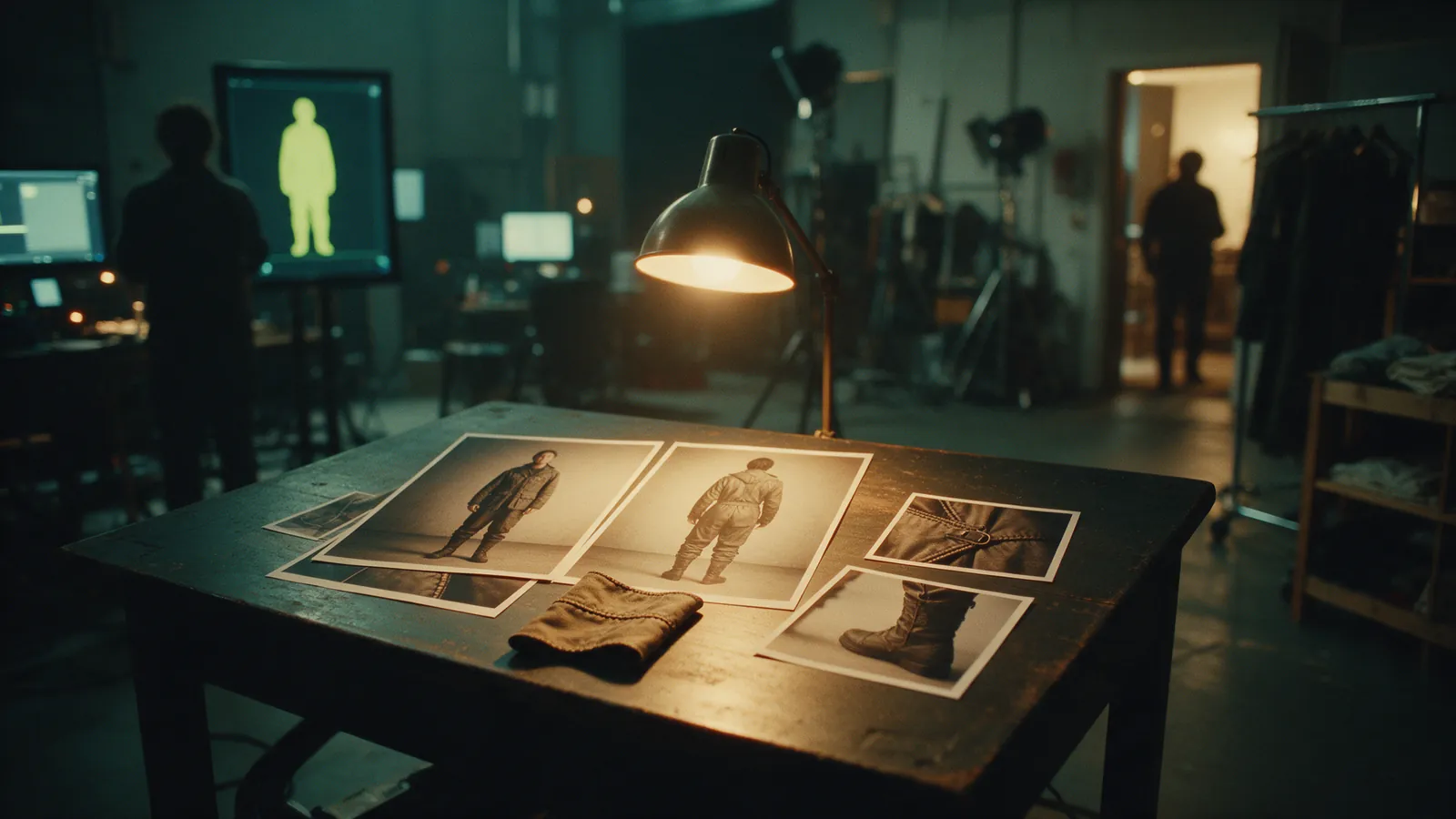
Build Wardrobe References Around What Your Character Always Wears
Group permanent clothing into one 3:4 look, separate optional pieces, and create independent references for each story state.
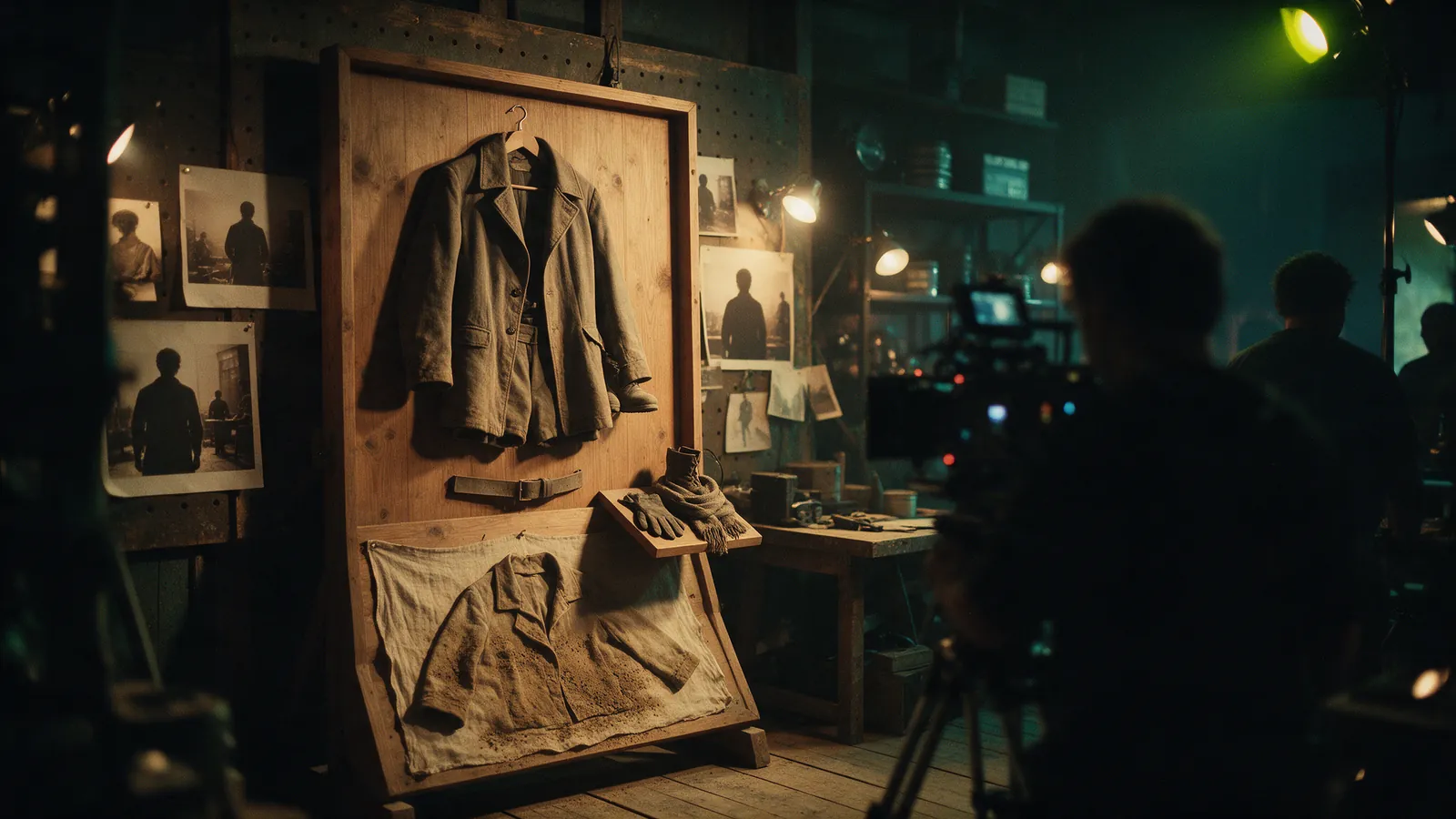
A fixed wardrobe look belongs in one 3:4 image as a complete outfit.
I do not split the permanent shoes, shirt, trousers, jewelry, and other fixed pieces into separate references. If the character always wears them together, I generate them together.
That single decision determines how I organize the rest of the wardrobe.
The method has three layers: the fixed look, optional pieces, and narrative states. Mixing those layers creates references that cannot answer a basic continuity question: what is the character supposed to be wearing in this scene?
Start with the broad definition of wardrobe
Wardrobe includes everything worn by the character.
That means clothing, footwear, body accessories, and adornments. The definition applies to humans, animals, nonhuman characters, creatures, and anthropomorphic characters.
An animal’s collar, scarf, bell, or bow is wardrobe.
This broad definition prevents accessories from disappearing into an undefined middle category. If an item is worn and contributes to the look, I treat it as wardrobe.
The boundary with props remains practical. A physical scene object such as a cup is a prop. Glasses being worn, a wristwatch, or a cap are wardrobe.
Before generating references, I decide which side of that boundary each item occupies.
Identify the permanent look
I begin by listing what the character always wears as part of one look.
The protocol gives a complete example: shoes, cap, glasses, sweater, shirt, trousers, watch, bracelet, ring, and necklace. If all those pieces always appear together, they belong in the same generation.
They are not ten independent wardrobe references. They are one outfit.
This matters because the outfit is more than a collection of objects. It has a combined silhouette, fit, and pattern of relationships across the body.
The shirt meets the trousers in a specific way. The sweater changes the upper silhouette. The shoes complete the full-body shape. The jewelry and accessories occupy fixed positions within that look.
Generating the complete set in one image gives me one approved answer for how those pieces work together.
“Done right” means the image shows the full permanent look, not a partial selection that requires later assembly.
Do not fragment what always travels together
It can feel orderly to create one image for every item. For fixed wardrobe, that is the wrong organization.
Separate references imply separate choices. The permanent outfit is not a collection of optional switches. It is one approved configuration.
If the cap, glasses, sweater, shirt, trousers, watch, bracelet, ring, necklace, and shoes never change independently, separating them creates unnecessary combinations.
The rule is simple: if it is always worn, integrate it into the complete set.
This also gives the outfit one continuity standard. I can inspect the full construction in a single image and judge whether every permanent item is present.
The 3:4 frame belongs to the outfit as a whole.
Pull optional items out
An item that appears in some scenes and disappears in others needs its own reference.
The protocol names a cap, backpack, glasses, watch, ring, necklace, bracelet, scarf, coat, and pet bow as examples of pieces that may need separate treatment.
The object type does not decide whether it is separate. Its behavior in the story does.
A cap that is always part of the look stays in the complete outfit image.
A cap that appears only sometimes becomes an individual wardrobe reference.
The same logic applies to glasses, jewelry, a coat, or an animal accessory. “Always worn” and “sometimes worn” are different continuity instructions even when the physical item is identical.
This is the decision I make for every piece:
If it always appears with that look, it stays inside the set.
If it is optional or variable, it gets its own image.
Keep optional pieces truly independent
An optional reference should not silently redefine the base look.
Its purpose is to document the piece that can enter or leave the costume. The fixed outfit remains approved separately.
That allows the scene requirement to be clear. I can call for the complete look and then account for the variable item without rebuilding the permanent clothing from scratch.
The method does not ask me to break the full look apart. It asks me to isolate only what genuinely changes.
That difference controls the asset count. A wardrobe with no optional pieces needs the complete outfit reference. Every optional piece adds an individual reference.
The extra asset is the cost of preserving a real variation.
Separate narrative states
Clean, dirty, new, worn, torn, wet, bloodied, and burned clothing are different states.
Each state needs an independent reference. They are not combined into one image.
This is easy to mishandle because the underlying garment may be the same. The story state is still different.
A clean outfit does not document where the dirt appears.
A new outfit does not document wear.
A dry outfit does not define the wet version.
A complete garment does not define the torn version.
The same applies to blood or burns. Once the condition carries continuity, it becomes part of the wardrobe reference.
I therefore treat each approved state as its own asset. I do not ask one image to represent several incompatible conditions.
Do not average the states together
Combining clean, dirty, wet, and damaged information into one reference would make the target ambiguous.
The required method keeps them separate. That gives each state a clear visual definition.
When the story calls for the clean version, I use the clean reference. When it calls for the worn or bloodied version, that condition has its own approved image.
The cost grows with the number of meaningful states. One base look plus several story conditions is not one wardrobe asset. Each condition creates another reference.
That extra work is not decorative. It records the continuity change the character carries from scene to scene.
Approve materials
Once the grouping is correct, I inspect whether the clothing material can be reproduced.
Material is one of the required continuity properties. The approved image needs to show what the outfit is made of clearly enough that later scenes can maintain it.
I do not approve a look only because the colors are attractive or the character feels right. The garments themselves have to be resolved.
The same standard applies to optional pieces and state variants. A separate coat reference still needs a clear material. A wet or burned version still needs to belong to the same established wardrobe construction.
Approve the pattern and color
Pattern and color must remain consistent after approval.
That includes the overall garment design and the placement of visible pattern information.
The complete outfit image has to provide a stable answer for the full look. If several pieces are permanent, their colors and patterns need to work together in that one approved set.
Optional pieces receive the same inspection in their individual references.
Story states can alter condition, but they still need to preserve the clothing identity established for that look.
“Done right” means I can identify the approved colors and patterns without choosing between conflicting versions.
Approve silhouette, fit, and construction
Silhouette and fit are separate acceptance criteria.
Silhouette is the total shape the outfit creates around the character. Fit describes how the clothing sits on the body.
Both need to remain reproducible.
Closures, ornaments, included accessories, wear, and distinctive details also belong to continuity. A look is not approved while those elements remain vague.
This is why the permanent wardrobe appears together. The full image shows how all those details contribute to one body-level construction.
A separate image for every button, ring, or shoe would not document the combined silhouette as directly as the complete set does.
Count wardrobe by looks, pieces, and states
I budget wardrobe references in three groups.
The first group is one 3:4 image for each complete fixed look.
The second group contains one individual image for every optional or variable piece.
The third group contains independent references for every narrative state that matters, including clean, dirty, new, worn, torn, wet, bloodied, or burned versions.
That count tells me the real preparation work.
A costume change is not only new text in a shot prompt. It can require a new approved set. A change in condition can also require a separate reference even when the garment design remains related to the original.
The wardrobe library should reflect what actually changes on screen.
Use one practical test
Before approving the set, I ask whether another scene could reproduce the same materials, pattern, colors, silhouette, fit, accessories, wear, closures, ornaments, and distinctive details.
If the answer depends on guessing, the reference is not ready.
If the image shows the permanent look clearly and the variable pieces and states have been separated, the wardrobe system has an explicit structure.
The method can then preserve what stays fixed and change only what the story changes.
Today, take one character’s wardrobe list and mark every item as always worn, optional, or a separate story state. Generate the always-worn group as one 3:4 look before making any individual accessory reference.
A method is what still works on the morning inspiration doesn't show up.