Cuchara Limpia
Work/Vertical Series/Cuchara Limpia
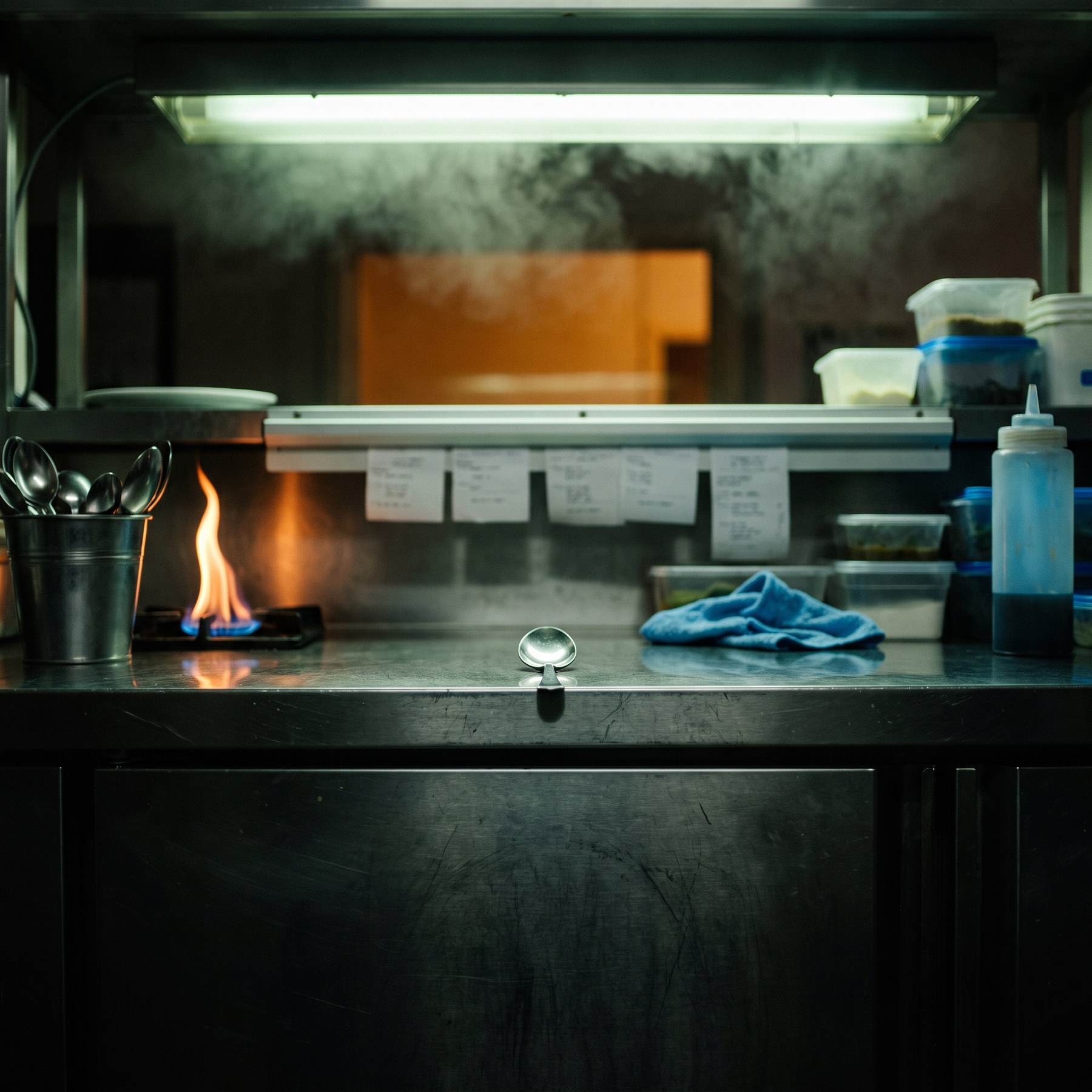
Professional pride becomes a struggle for survival when a restaurant's new partner forces a chef to share his kitchen with a rival. They have three months to outsell each other, with the same job at stake.
Behind the story
Why I made it
Attention to another person's skill can become the beginning of desire. With Iago and Teo cooking in view of their colleagues, I wanted attraction to emerge through the handling of a knife, the tasting of a dish and the concentration those gestures reveal. The kitchen keeps that intimacy within a shared responsibility: however closely they watch each other, the work must continue.
The world
I give desire the physical immediacy of professional cooking at Casa Corvo, a twenty-four-cover restaurant in an unnamed Spanish Atlantic port city. Fish arrives from the market, orders rise over the extractor and busy services draw hands and utensils into constant proximity. The pressure to send out each dish makes romance part of the kitchen's working rhythm.
The characters
Iago Corvo
Head chef at Casa Corvo. Iago's place in Casa Corvo reaches beyond his job. After twelve years leading its kitchen, protecting his position also means protecting the work and family name bound to it.
Teo Bardají
Newly appointed rival head chef. Teo enters through the service door with precise technique and little patience. His wish to cook must contend with the competition the new partner has imposed on the kitchen.
Gael Sandoval
Restaurateur and new business partner. Gael measures the chefs' rivalry through sales, personally counting the receipts that determine their jobs. Already owning two restaurants, he has bought half of Casa Corvo.
Registered works
Every film, series and book on this site is a registered work and the exclusive property of Jeff Zambrano. Stories, characters, titles, scripts and images may not be copied, adapted or used to train any system without written permission. Copies and derivative works are traced automatically, and any infringement will be pursued under the laws of the country where it originates.
